Sportsman
Feb 25, 2026

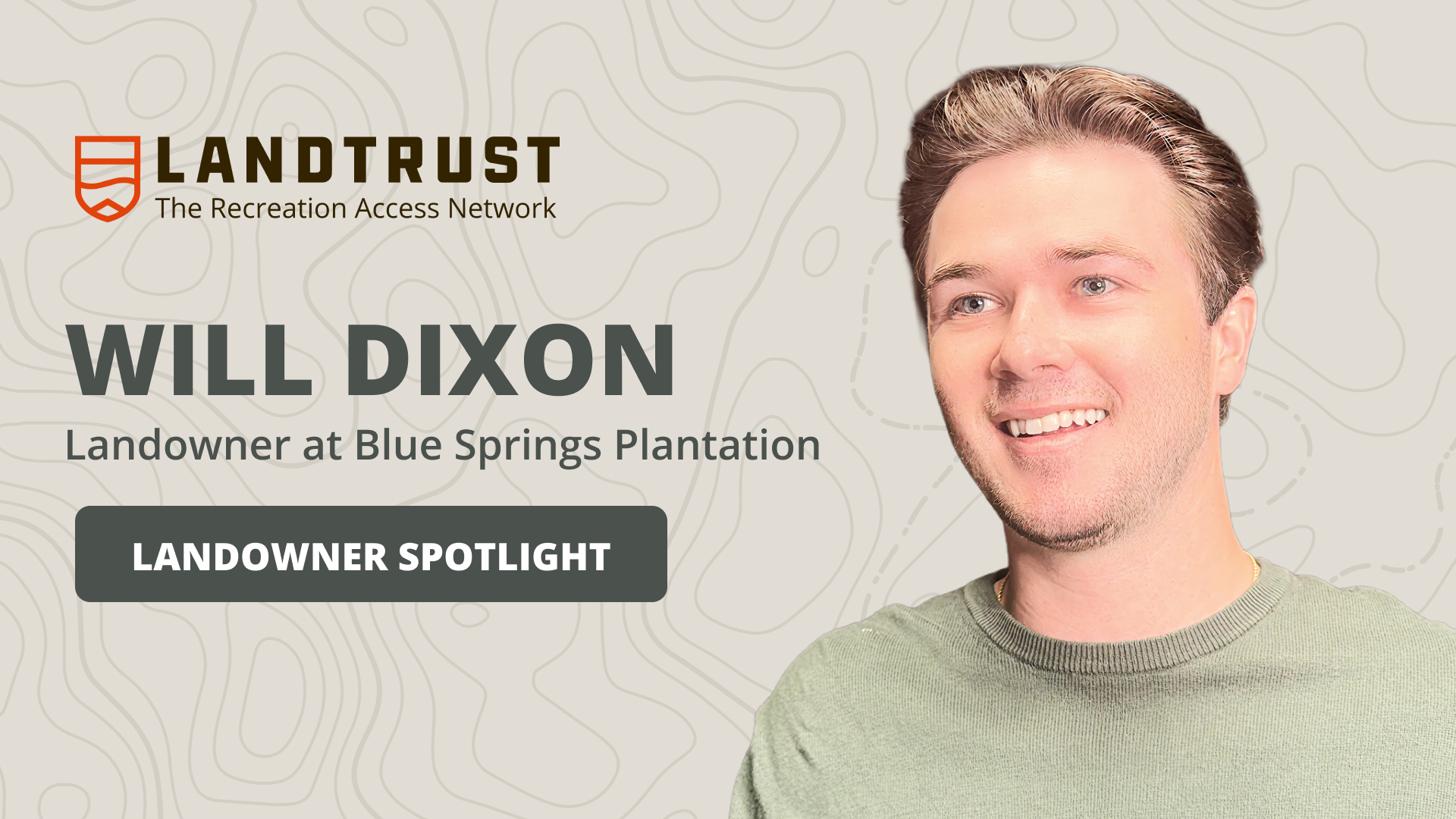
For Will Dixon, land isn’t just an asset—it’s a responsibility that’s been passed down for nearly a century.
As a fourth-generation land manager in southeast Alabama, Will grew up in a family rooted in the timber and forestry industry, with a legacy dating back to 1928. Today, that legacy continues through hands-on stewardship, evolving land use strategies, and a willingness to adapt to a changing outdoor landscape.
In this episode of the LandTrust Podcast – Seasoned Host Series, Will shares how Blue Springs Plantation represents both a continuation of tradition and a step forward—embracing new ways to generate revenue, steward land, and create meaningful outdoor experiences for others.
The Dixon family has spent generations building a business around timber—growing it, managing it, and harvesting it across tens of thousands of acres in Alabama and Georgia. Today, they oversee nearly 20,000 acres, with timber still serving as the primary driver of revenue.
But in recent years, something has shifted.
Recreation—especially hunting—has become a more meaningful part of the equation. What once served as a supplemental income stream has grown into a significant contributor, reshaping how landowners think about the value of their property.
That shift opened the door to new possibilities.
When the Dixon family acquired Blue Springs Plantation, it stood apart from their typical holdings.
At 870 acres, the property offered a level of diversity and intentional design that made it feel less like industrial timberland and more like a complete recreational experience. The previous owners had spent years shaping it into exactly that—something you could feel the moment you stepped onto the property.
From hardwood bottoms and creek systems to multiple age classes of pine and a 22-acre duck pond, the land provides a range of habitats that naturally support deer, turkey, and waterfowl. Add in established road systems, shooting houses, and well-placed food plots, and it quickly became clear this was more than just another tract.
“It really was the total package,” Will explains.
Instead of treating it like the rest of their portfolio, the Dixon family saw an opportunity to do something different.
For years, their approach to hunting access had been straightforward: annual leases. It’s a model that still works well in many cases—providing consistent income with minimal management.
But it also comes with trade-offs.
Leasing typically gives exclusive access to a small group for an entire season, limiting flexibility for both the landowner and anyone else who might want to use the property.
With Blue Springs, Will envisioned a different approach—one that allowed them to open the property to more people while still maintaining control over how it was used.
That’s what led them to LandTrust.
By shifting to a short-term access model, the Dixon family could offer a range of hunting opportunities throughout the year without locking the property into a single lease. It created space for more experiences, more flexibility, and ultimately more impact.
“We’re not in the business of holding this to ourselves,” Will says. “We want people to come make memories out here.”
Even as the business model evolves, the foundation remains the same: stewardship.
For Will, that means staying closely connected to the land. Some days are spent in the office, but many are spent in the field—running equipment, managing habitat, or planning the next improvement.
That hands-on approach shapes everything about how Blue Springs is managed.
The short-term model allows them to stay actively involved, monitoring hunting pressure, adjusting strategies, and maintaining the quality of the property over time. It’s not about maximizing the number of people on the land—it’s about making sure every experience is a good one.
“We can keep our thumb on the pulse of the property,” Will says, “and really cultivate it how we want it to be.”
In much of the Southeast, access to quality hunting land is limited.
Unlike the West, where public land is abundant, most opportunities in Alabama exist on private ground—often tied up in long-term leases. That makes it difficult for hunters who don’t have the time or resources to commit to a full-season arrangement.
Blue Springs offers a different path.
By providing short-term access to a well-managed property, it creates opportunities for hunters who might otherwise be left out—whether they’re traveling from out of state, introducing a young hunter to the outdoors, or simply looking for a new experience.
And with infrastructure already in place—things like shooting houses, maintained roads, and established food plots—it lowers the barrier to entry in a meaningful way.
One of the most rewarding parts of the experience, Will says, has been the interaction with hunters themselves.
From answering questions to helping plan hunts, he’s found a lot of value in being part of the process—not as a guide, but as someone who knows the land and wants others to enjoy it.
“I want to give them the best chance to succeed,” he explains.
That mindset shifts the experience from something purely transactional into something more personal—where both the landowner and the hunter get something meaningful out of it.
Blue Springs Plantation is still evolving.
The Dixon family is currently renovating an on-site cabin, with plans to offer lodging in the near future. They’re also continuing to invest in habitat work, including prescribed burns and timber management, while exploring opportunities to expand into guided quail hunts down the line.
Each step is intentional, focused on improving both the land and the experience it provides.
At its core, the goal is simple: create a place people want to come back to.
Located in Barbour County, Alabama, Blue Springs Plantation offers a rare combination of thoughtful management, habitat diversity, and accessible hunting opportunities.
Whether you’re chasing spring turkeys, whitetail deer, or waterfowl—or just looking to spend time outdoors with family—it’s a property designed to be experienced.