Podcast
Oct 16, 2025

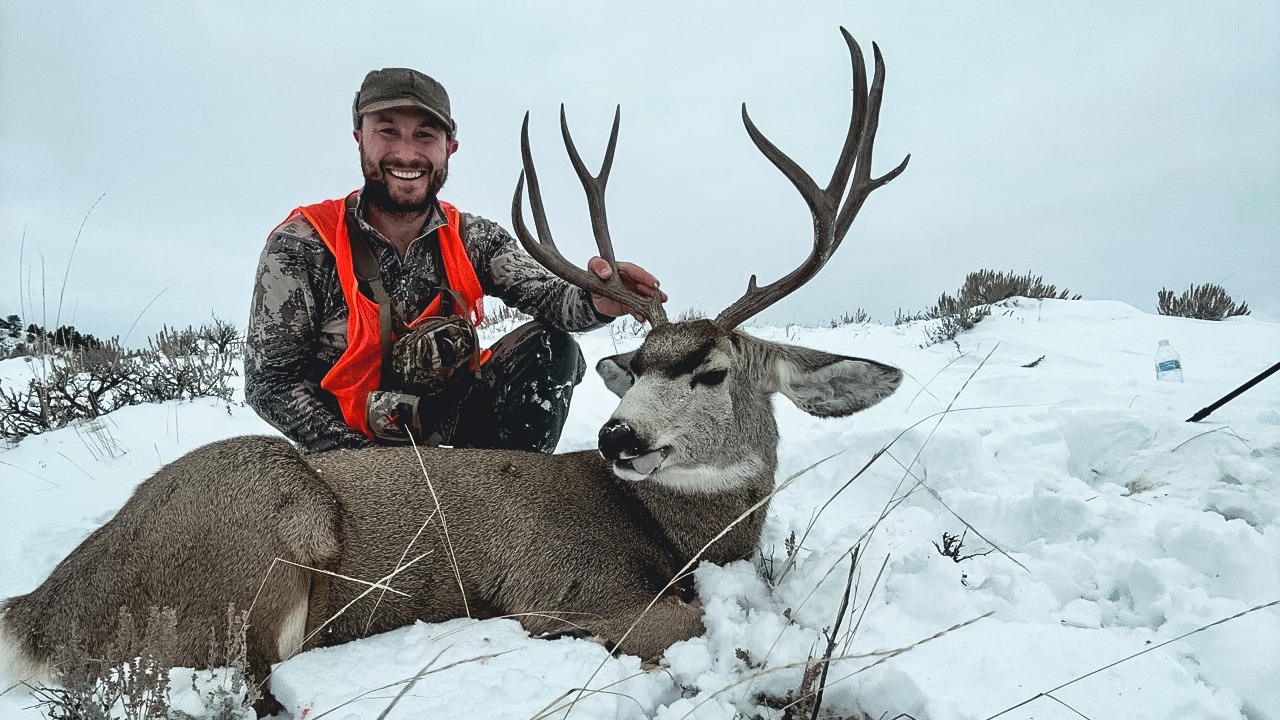
There’s a moment in every out-of-state hunt where reality sets in.
You’ve driven hundreds—maybe thousands—of miles. Time is limited. Expectations are high. And suddenly, the difference between a well-planned trip and a rushed one becomes painfully clear.
When it comes to mule deer, the margin for error is even smaller.
Unlike more accessible hunts, tags aren’t something you just grab off the shelf anymore. Opportunities exist, but they’re harder to come by—and that makes every decision leading up to the trip matter that much more.
The goal isn’t just to go hunting. It’s to make the most of the time you have when you finally get there.
At the beginning, everything feels possible.
Colorado, Montana, Idaho, Nebraska—there’s no shortage of places to chase mule deer. But that wide-open option set can quickly become a problem if you don’t start narrowing things down early.
The first layer is simple:
Those answers immediately begin to filter your options.
From there, tag availability becomes the next gate. Some hunts are achievable this year. Others might take years of planning and preference points. Both are valid—but you need to know which path you’re on early.
That clarity is what turns a vague idea into an actual plan.
Once you’ve narrowed the scope, the real work begins.
This is where research starts to separate good hunts from wasted trips.
Talk to state biologists. They’re one of the most underutilized resources available, and they can give you real insight into herd health, population trends, and what’s changing on the ground.
Pair that with hard data:
And don’t rely on just one source.
Mapping tools, draw odds platforms, and hunt data services all play a role. But so do conversations—with landowners, with other hunters, and with anyone who has firsthand knowledge of the area.
The more angles you cover, the fewer surprises you’ll run into later.
One of the biggest mistakes in out-of-state hunting is relying too heavily on a single plan.
Pins dropped from 700 miles away don’t always look the same when you’re standing there. Weather changes. Pressure shifts. Access disappears.
If Plan A fails—and it often does—you need somewhere to go next.
That means stacking options:
Today, there are more tools than ever to help with that. Digital mapping platforms, hunt data services, and access networks like LandTrust all give you ways to line up contingencies before you ever leave home.
The goal isn’t perfection—it’s flexibility.
It’s easy to focus entirely on where the deer are.
But logistics can make or break a trip just as quickly.
If you’re hunting a remote unit, start asking practical questions:
These aren’t afterthoughts—they’re part of the plan.
Because when something goes wrong—and eventually, something will—you don’t want to be scrambling for basic necessities when you should be adapting your hunt.
At the end of the day, an out-of-state mule deer hunt comes down to one thing: time.
You don’t have much of it.
And once you arrive, every hour spent figuring things out is an hour you’re not hunting—or not enjoying the trip with the people you came with.
Good planning doesn’t guarantee success.
But it does eliminate the unnecessary friction. It gives you options when things change. And it lets you spend your time doing what you came to do in the first place.
Hunt hard. Adjust when needed. And make the most of every mile it took to get there.