Sportsman
Sep 3, 2026

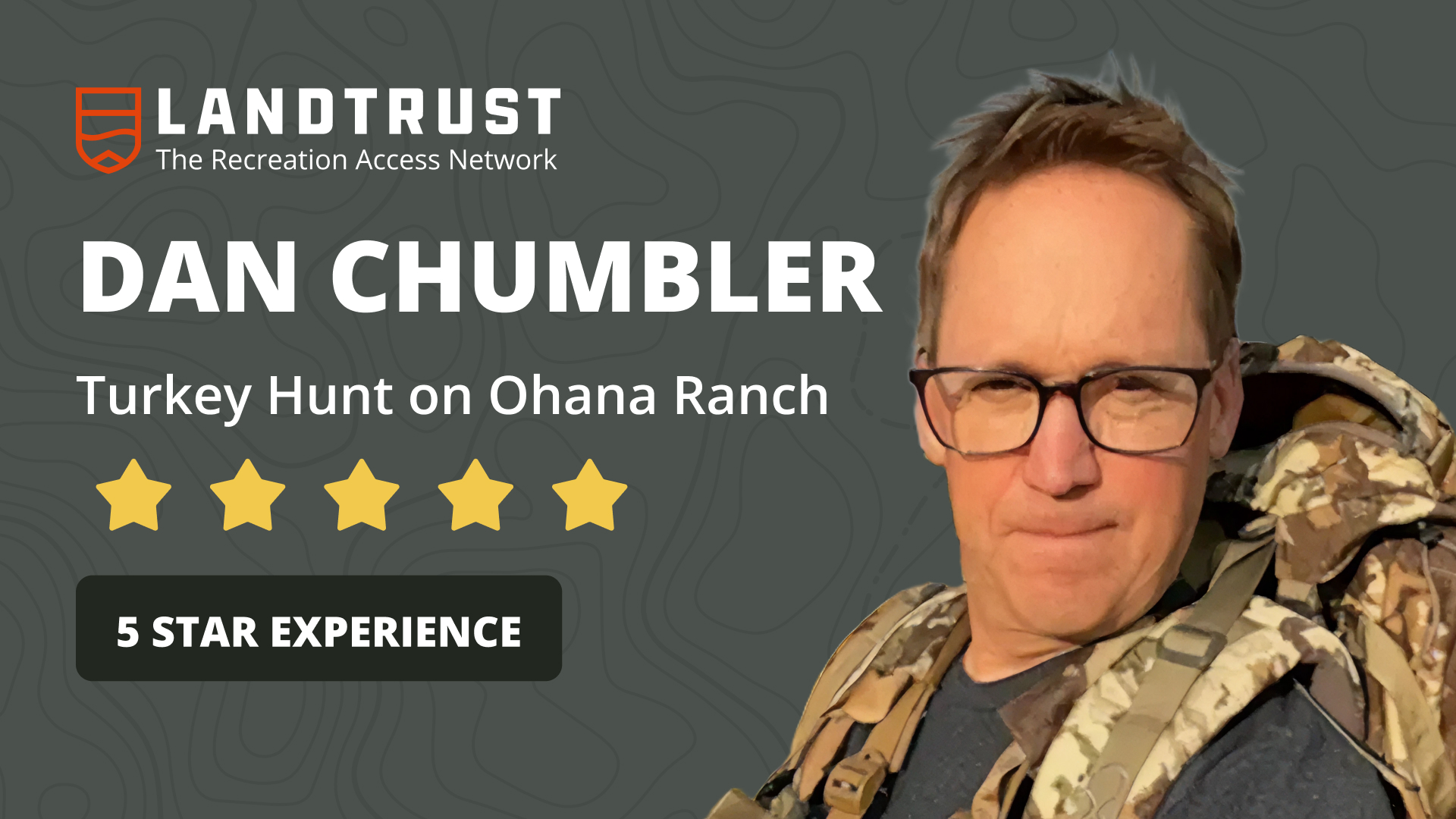
When Dan Chumbler booked a late-season eastern turkey hunt at Ohana Ranches in Tennessee, he wasn’t just looking for a bird. He was looking for an edge.
An hour and a half from his home near Nashville, the property offered something he couldn’t find on heavily pressured public land: direct collaboration with the landowner, real-time intel, and a strategy built around how the birds were actually behaving that week.
What he didn’t expect? Spending the night in his ground blind under a full moon — and dropping a silent gobbler at 35 yards the next morning.
Leading up to the hunt, Dan had been chasing turkeys on nearby WMAs. The birds were there, but so were the hunters. By late season, the pressure had taken its toll. Gobblers were quiet. Educated. Careful.
Instead of grinding it out in crowds, he booked Ohana Ranches through LandTrust and connected directly with Brian, the landowner. That’s when the hunt really started.
Brian didn’t just hand over access. They talked through bird movement, recent sightings, prior hunter success, and late-season tendencies. Together, they developed a plan. It wasn’t guided — but it was collaborative. And that made all the difference.
Because birds had been roosting near a particular tree line, Dan decided to remove one of the biggest risks in turkey hunting: walking in before daylight and bumping birds.
So he set his ground blind near the roost area and stayed the night.
Sleeping pad. Sleeping bag. Coyotes lighting up under a bright full moon.
It wasn’t luxury. It was strategy.
By morning, he was already in position. No headlamp. No crunching leaves. No unnecessary movement. He slipped out at first light, placed a breeding pair of decoys along a powerline cut where they’d be visible from distance, then eased back into the blind to wait.
An early gobble broke the morning — but it was far off. Then another at legal shooting light. And then… quiet.
Dan called sparingly, just enough to let any nearby bird know where he was. Then he went silent.
Late-season birds don’t always announce themselves.
Without a sound, a longbeard crested a small rise. No strut. No gobble. Just a cautious approach, head high, eyes scanning. He’d spotted the decoys on the hillside but couldn’t see the blind tucked into the timber.
At 35 yards, weaving through the trees, he paused just long enough.
Dan already had the gun up. Safety off. One clean shot. Bird down.
This hunt stood out not just because of the bird, but because of the dynamic behind it.
On public land, collaboration between hunters is rare. On private land through LandTrust, incentives are aligned. Brian lives on the property. He hunts it. He limits the number of turkey hunts each season to protect the population. Success for the hunter doesn’t come at the expense of the land — it supports it.
That’s a different framework than high-volume outfitting. It’s stewardship first.
Dan appreciated it enough that he booked again the following season — this time earlier in the year. When scheduling conflicts came up, he reached out to Brian to adjust dates. Brian gave honest feedback about recent pressure and bird activity, and Dan shifted his hunt accordingly.
That kind of back-and-forth simply doesn’t exist in most traditional hunting models.
Dan has used LandTrust across multiple states for whitetail hunts, scouting trips, and even shed hunting. Booking private land for shed season has become one of his favorite off-season plays — affordable access to large properties, boots on the ground time, and a chance to learn terrain before fall.
It’s recreation and scouting rolled into one.
And as LandTrust expands into more markets, hunters can carry that same model — private access plus landowner insight — from Tennessee to Ohio to the Midwest and beyond.
Every turkey booking on LandTrust now includes a $10 conservation fee that goes directly to Turkeys for Tomorrow, one of the fastest-growing turkey conservation nonprofits in the country. That means every hunt supports habitat improvement and long-term population health.
Landowners like Brian are already managing their ground carefully. The added conservation support helps amplify that effort.
Ohana Ranches limits the number of turkey hunts each season, which is why it books quickly. Fewer hunters. Less pressure. Healthier birds. Better experiences.
But properties like it exist all over LandTrust.
Whether you’re chasing eastern turkeys in the South, scouting whitetail ground in Ohio, or booking a shed hunt to learn new terrain, the formula stays the same:
Private access. Landowner collaboration. Healthy wildlife. Aligned incentives.
And sometimes — if you’re willing to sleep in your blind — a silent gobbler slipping in at 35 yards.