
Landowner
Sep 4, 2026
What Hunters Don't See When They Drive By Beautiful Land
There's a piece of ground out in western Kansas, river cutting through it, high recreation value, the kind of place that makes a hunter slow down and stare. It looks like someone's doing just fine.
On the back end of it, there's a lawsuit between siblings that's been running for fifteen years.
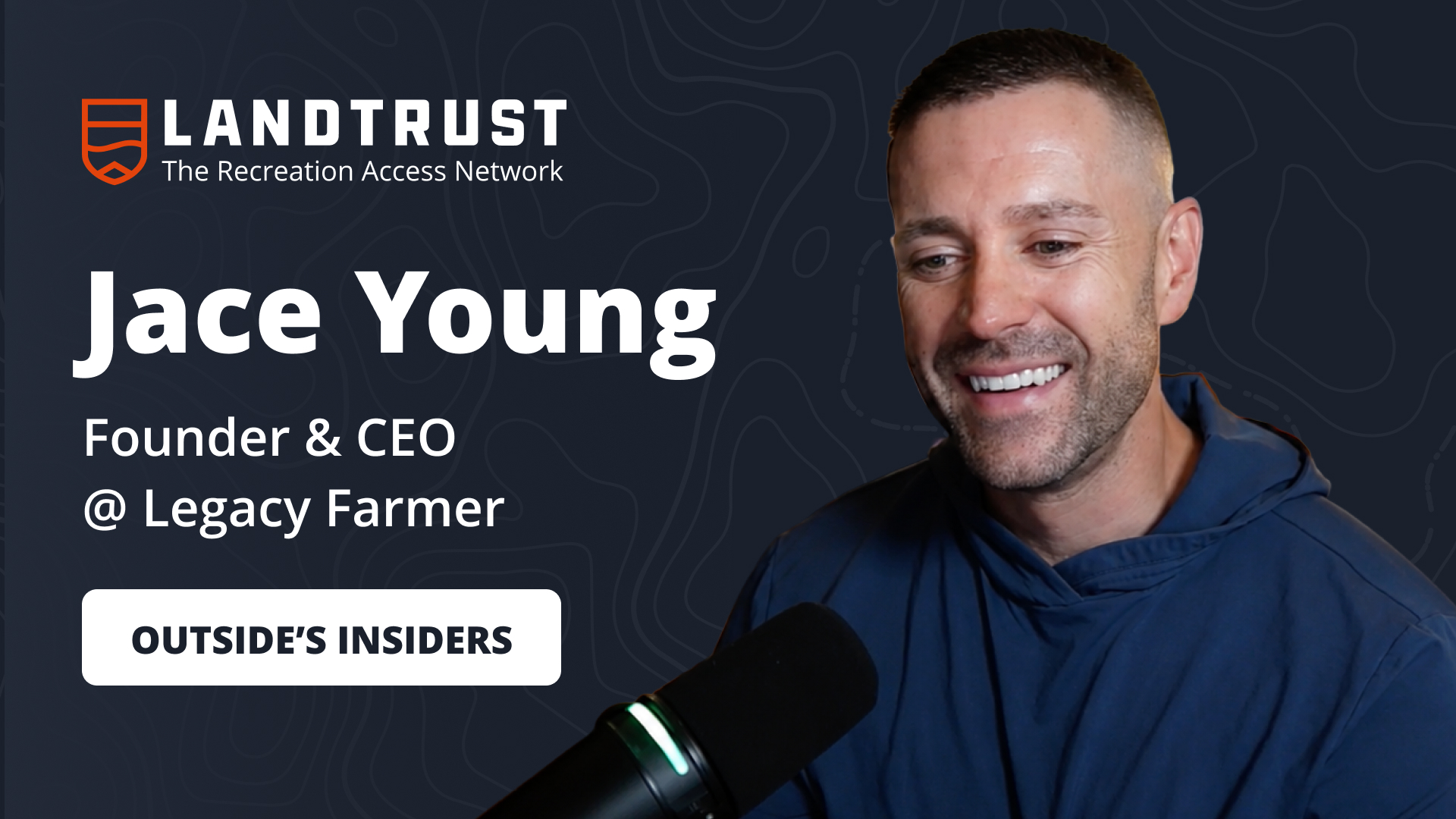
That's the gap Jace Young has spent his career trying to close, the distance between what a piece of land looks like from the road and what's actually happening behind closed doors. As founder and CEO of Legacy Farmer, he works with over 400 family farm operations across the country, helping them understand the financial side of their operations before it's too late. In a recent conversation on the LandTrust podcast, he shared what that work has taught him, and why everyone who loves the outdoors should be paying attention.
A Farm That Shouldn't Have Failed
Jace grew up on a multi-million dollar operation in Tribune, Kansas, a small town in the western part of the state with a flashing stoplight and maybe fifteen hundred people in the entire county. His grandfather built it from a handshake deal with a Denver banker in the 1950s into a sprawling operation with a 14,000-head feedyard, several thousand acres of farm ground, and a grain elevator. All five of his grandfather's kids were involved. All the cousins too.
In the summer of 2005, the whole thing went bankrupt.
Jace was in high school. He helped his parents pack up the house they'd lived in for thirty years. His dad, who had been riding pens on that feedyard since he was five years old, who married at seventeen and went straight from high school graduation to the farm, was forty-five years old with no identity left to stand on.
"The toughest thing I watched my dad go through was the loss of an identity that had been cultivated and crafted over forty years."
The ripple effects were immediate and lasting. Farmers in Greeley County who'd been impacted by the collapse resented it. Family members Jace hadn't seen in ten years didn't reappear until his grandfather's funeral in 2015. His parents filed Chapter 7 bankruptcy. They weren't able to get a home loan until 2019.
Looking back now, Jace can see what happened clearly. His grandfather was trying to run a 2005 operation on 1975 principles. Pride kept him from asking for help or telling the truth about what was happening. His dad made lifelong commitments, moved back, built his life there, based on promises that were never written down.
"He said, 'I should have asked a lot more questions.'"
What's Actually Happening Behind the Gate
Legacy Farmer exists because that story isn't unique. It plays out across rural America in ways that most people driving by on a county road never see.
A family running a $60 million operation with ten business partners, some of them siblings, some of them cousins they haven't spoken to in two decades, who only communicate through lawyers. A mother signing loan documents with emptiness in her eyes, carrying the weight of three prior generations in a banker's office. Decisions made in the 1950s that are still being litigated today.
"The decisions they're making today, or lack thereof, will be felt fifty or sixty years from now."
From the road, it all looks fine. From the inside, the math often doesn't work. In Iowa, ground can trade for $12,000 to $15,000 an acre while renting for $300 to $400. Even at the highest rental rates, if the ground isn't paid off free and clear, it doesn't cash flow. The farmer with five thousand acres isn't rich by default. He's probably at break even, if not running at a loss, and trying to figure out how to make it to next year.
And the ones that are really successful? Almost without exception, they're not just farming. They're stacking enterprises, a custom hauling business, a service operation, a YouTube channel that brings in rental inquiries from landowners who want someone they trust. The identity of being a farmer can be so strong that it becomes a trap, locking people into one way of doing things long after that way stops working.
Why Sportsmen Should Care
The lower 48 is seventy percent private land. Around 900 million acres of it is agricultural ground. Public land is predominantly concentrated in the West. Which means that if you love to hunt and fish, you're probably going to do it on private land, and whether that land stays intact, stays accessible, and stays undeveloped has everything to do with whether the person who owns it can make it pencil.
"I've never seen anything undeveloped. Once it's gone, it's gone."
When a family operation fails, the ripple effects go beyond the family. Rural schools lose students. Healthcare services thin out. Small businesses close. And eventually, that ground gets sold, maybe to a corporation, maybe to a developer. Either way, the huntable acres shrink.
There's a contingent of hunters who are frustrated about access and blame landowners. Jace and Nic both push back on that. The farmer running five thousand acres of beautiful ground isn't getting rich off it. Farm bill subsidies exist because, without them, there would be far fewer farmers left. And the large operations that game the subsidy system most aggressively are the ones that least need it, a reality Jace sees clearly from both sides and doesn't pretend away.
What he'd rather hunters take away is something simpler: when you drive by that piece of ground and slow down to look at it, ask yourself what the legacy of that place actually is. How many generations of work went into making it what it is. What it would cost to lose it.
"We're all stewards. It's our job to take the best care of it while we're here."
The Other Side of the Problem
There's a version of this story that ends differently, and Legacy Farmer is built around helping families find it.
Succession planning done right, before it has to be done. Hard conversations had early, while there's still time to make different decisions. Kids pushed to start their own businesses rather than simply inherit one, so they build the skills and resilience that running an operation actually requires. Multiple enterprises layered onto the same land base, ag production alongside outdoor recreation, hunting access, service businesses, so that no single revenue stream has to carry everything.
Recreation, in particular, is an opportunity Jace sees consistently underutilized. For a family that's been farming the same ground the same way for decades, the idea of hosting hunters can feel foreign. But it's a business that can be started with no capital, no cost of goods sold, and almost no barrier to entry, and it generates cash flow that can make the difference between staying on the land and losing it.
"There's so many opportunities on how we can use the resources we currently have. But the identity of a farmer is so strong that people get locked in."
His grandfather spent his final years trying to rebuild relationships he'd let erode, calling Jace every two weeks, working his way back through the family. The guilt of avoidance, Jace says, is always heavier than the discomfort of the hard conversation would have been.
The best time to plan is before you need to.
Jace Young is the founder and CEO of Legacy Farmer, which exists, in his words, to "protect the legacy of agriculture, one family farm at a time." You can find him on Instagram, Facebook, and TikTok, or learn more at legacyfarmer.com.