Sportsman
Dec 17, 2025

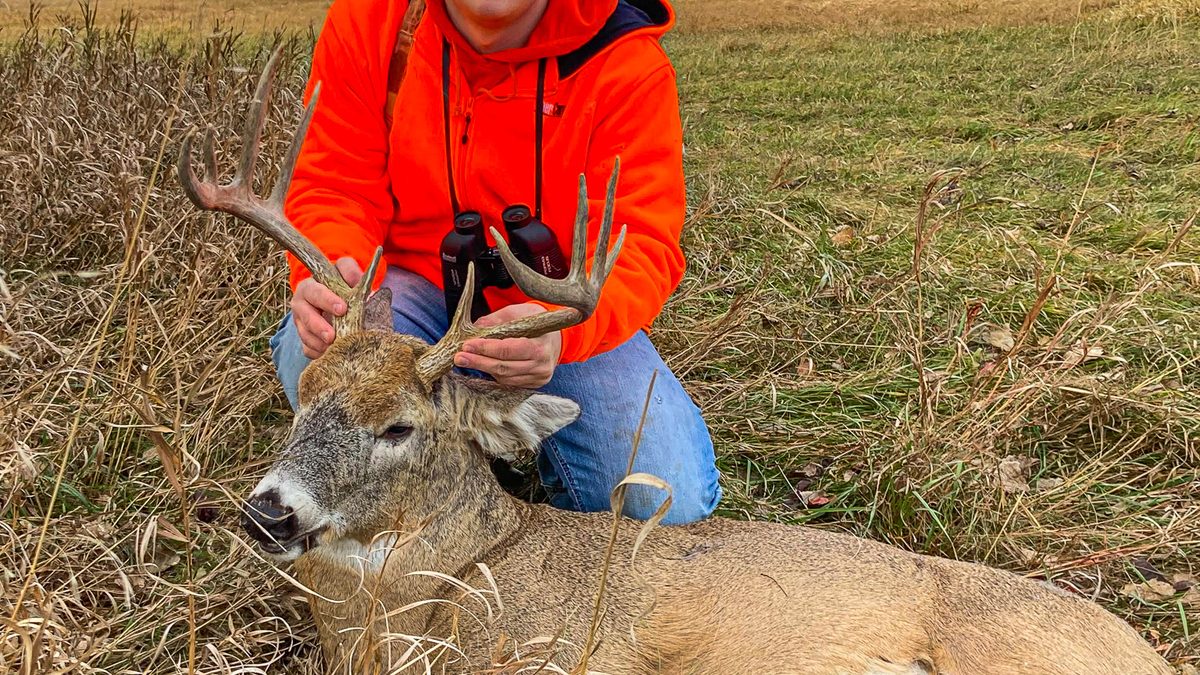
The shot is the moment everything in a hunt converges — the scouting, the stand placement, the wind check, the patience of waiting through slow mornings. Getting that moment right means putting the bullet or broadhead exactly where it needs to go, not approximately where you think it should go. Deer are resilient animals, and a marginal hit that might seem close enough in the moment often isn't. Understanding shot placement is the single most important skill a deer hunter can develop, and it applies equally whether you're hunting with a rifle, shotgun, muzzleloader, or bow.
This guide covers the anatomy that makes shot placement matter, the best shots to take, the shots to pass on, and how to interpret what happens after the shot so you can recover your deer efficiently.
There is more debate in the hunting world about calibers, bullet weights, and broadhead designs than almost any other topic. Most of that debate misses the point. A well-placed shot with a .243 Winchester will kill a deer more efficiently than a marginal hit with a .300 Win Mag. A properly placed broadhead from a 55-pound recurve will kill a deer more cleanly than a pass-through from a 70-pound compound that catches the wrong anatomy. The weapon matters far less than where it sends the projectile.
The reason is deer anatomy. A whitetail's vital zone — the heart and lungs — is a roughly basketball-sized target located in the chest cavity behind the front legs. Hit that zone with almost any legal deer hunting projectile and you will kill the deer quickly and humanely, typically within seconds to a few hundred yards. Miss that zone and you have a wounded deer, a difficult recovery, and an outcome that no hunter wants regardless of how much they spent on their rifle or bow setup.
The heart sits low in the chest cavity, roughly at the level of the deer's elbow when the front leg is extended. The lungs occupy the majority of the chest cavity above and behind the heart, extending back toward the last few ribs. Together, the heart-lung complex presents a roughly ten-inch-wide by twelve-inch-tall target on a mature whitetail standing broadside at reasonable range.
Hits in this zone cause rapid blood pressure loss. A deer hit through both lungs with a rifle bullet or broadhead will typically run less than a hundred yards before expiring, often much less. A heart shot produces similar results, sometimes faster. Both are what deer hunters call a "dead deer" shot — one that produces a quick, ethical kill with a high-probability recovery.
The liver sits behind the lungs, partially overlapped by the last few ribs. It is a large, blood-rich organ that produces a fatal wound but a slower death than a lung shot — typically thirty minutes to several hours before the deer expires. Liver-hit deer often lie down within a short distance and are recoverable, but pushing them too soon by tracking immediately causes them to run, making recovery significantly harder. If you suspect a liver hit, wait at least four hours before tracking.
The spine runs along the top of the deer's back. A hit here can anchor the deer immediately but is not a reliable kill shot — spinal hits without simultaneous vital zone penetration sometimes leave a deer down but alive, requiring a follow-up shot. Aiming for the spine intentionally is not recommended except as a follow-up shot on a deer already on the ground.
A deer standing perfectly broadside, presenting its side fully to the hunter, is the shot that deer hunting is built around. It offers the largest presentation of the vital zone and the most forgiving margin for error in any direction.
For a broadside shot with a rifle or firearm, the aiming point is directly behind the front leg at the centerline of the body — the horizontal midpoint between the top of the back and the bottom of the chest. This places the bullet through the middle of the lung zone, with margin above, below, and behind. If you aim directly behind the leg and your shot drifts a few inches forward, you clip the top of the heart. If it drifts a few inches back, you still have lung. If it drifts a few inches high, you hit spine and lung. The broadside shot is forgiving in a way that other angles are not.
For bowhunters taking a broadside shot, the aiming point shifts slightly — aim at the leg itself, not behind it. The arrow's entry point needs to be far enough back that the broadhead exits through the far-side lung rather than burying in the near-side shoulder. Bowhunters who aim at the same spot as a rifle hunter on a broadside shot frequently hit the near-side shoulder, stopping the arrow before it reaches the vitals. One-third of the way up the body, on or just behind the leg line, is the correct broadside aiming point for archery.
A deer quartering away — facing away from the hunter at an angle with its hindquarters closer — presents what many experienced hunters consider the best shot opportunity available. The angle allows the projectile to enter the body cavity at a point that drives it through the lungs and often the heart as it exits the opposite side.
For a rifle or firearm, aim at the point on the near-side body where you want the bullet to exit — roughly behind the opposite front leg. The bullet enters through the flank or last rib area and angles forward through the vital zone. The entry point looks far back on the deer, which is exactly correct — you're aiming to thread the bullet through the largest possible amount of lung tissue.
For bowhunters, the quartering away shot is the gold standard. Aim for the far-side front leg and put your broadhead on a path to exit there. An arrow angled correctly on a quartering away deer will pass through both lungs and often the heart, producing a complete pass-through with a quick, clean kill and excellent blood trail.
A deer quartering toward the hunter — facing toward the hunter at an angle — is a shot that many experienced hunters pass on and that beginners should avoid entirely. The angle requires threading a bullet or arrow past the near-side shoulder to reach the vitals, and the margin for error is small. A hit slightly to one side catches the near-side shoulder and stops the projectile. A hit slightly to the other side misses the vitals entirely.
For rifle hunters who are confident in their equipment and their angle judgment, a quartering toward shot aimed at the crease of the near-side shoulder where it meets the chest can be effective — the bullet angles back through the lungs from the front. But this is a shot that requires genuine confidence in your angle read and should be passed in favor of waiting for a better presentation whenever possible.
For bowhunters, the quartering toward shot should almost always be passed. Arrows lack the mass and momentum to reliably punch through the near-side shoulder to reach the vitals, and the angle required to thread past the shoulder is difficult to judge correctly from an elevated stand.
A deer facing directly toward the hunter — no angle, head-on — is a shot that should be passed regardless of weapon. The chest is the smallest possible target from this angle, the near-side shoulder presents a significant obstruction, and a slight miss to either side results in a leg or brisket hit that wounds the deer without entering the vital zone. Wait for the deer to turn and present a broadside or quartering away angle. It will happen if you stay still and patient.
A deer walking directly away — hindquarters presented, no angle — is another shot that should be passed in most situations. The aiming point would be the base of the tail, driving a bullet or arrow through the hindquarters and forward into the vitals. This shot can work with a rifle but produces significant meat damage to the hindquarters and is extremely unforgiving of any horizontal error. For bowhunters, a straight-away shot is essentially never the right call.
What happens immediately after the shot tells you a significant amount about where you hit. A deer hit through the lungs typically runs hard and fast for a short distance before stopping and going down — the rapid lung collapse drives an immediate flight response. You may hear a crash in the brush within a hundred yards. A deer hit through the heart often mule-kicks — a dramatic kick of the hind legs immediately after the shot — and then runs hard before going down quickly.
A deer that flinches but walks away slowly, hunching its back, is often a liver or gut hit. Do not pursue immediately. Mark your stand location, note the direction the deer traveled, and wait. A minimum of four hours for a suspected liver hit and six to eight hours for a suspected gut hit gives the deer time to bed down and expire rather than running when pushed.
A deer that runs off without any visible reaction and doesn't appear in the field after several minutes warrants a careful approach to where it was standing when you shot. Look for blood, hair, and bone fragments that indicate where the projectile hit. Bright red blood with bubbles indicates a lung hit — excellent sign. Dark red blood without bubbles suggests a liver hit. Green-tinged material indicates a gut hit. White hair near the entry point suggests a low hit on the brisket or leg. Each sign tells you something different about how to proceed with your tracking.
Blood trailing on private land has an advantage that public land hunting doesn't always provide — you know the property boundaries, you have permission to follow the deer wherever it goes on the property, and you're not competing with other hunters crossing your trail or disturbing the sign. When you book a private deer hunting property through LandTrust that certainty of access extends to the recovery as well as the hunt itself.
One of the most important shot placement decisions a hunter makes is whether to take the shot at all based on distance. A hunter who is consistently accurate to two hundred yards with their rifle and has practiced to that distance can take two-hundred-yard shots with confidence. A hunter who has practiced to a hundred yards should not be taking two-hundred-yard shots regardless of what their rifle is theoretically capable of.
The same principle applies to bowhunters. Know your effective range — the distance at which you can put an arrow in a ten-inch circle consistently from a realistic shooting position — and do not exceed it regardless of how long the deer stands there. A marginal archery hit from a distance beyond your effective range is worse than no shot at all.
Private land hunting gives you more control over shot distance than public land hunting in most cases. When you know the property, you know where deer approach your stand and at what distances they'll present shots. Setting up your stand with shot lanes cleared to your effective range and no further is a level of preparation that produces better outcomes than hunting unfamiliar public land where shot distances are unpredictable.
Shot placement knowledge is only useful if it's paired with the ability to execute the shot under pressure. Deer don't stand still for long, conditions in the field are rarely as controlled as a range, and adrenaline affects fine motor control in ways that most hunters underestimate until they're in the moment.
Practice from realistic positions — standing, sitting, from a tree stand height if possible — at distances that reflect where you'll actually be hunting. Bowhunters should practice from an elevated position shooting at a downward angle, which changes the effective draw length and arrow flight in ways that flat-range practice doesn't replicate. Rifle hunters should practice from field positions — sitting, prone, or resting on shooting sticks — rather than from a bench that doesn't exist in the deer woods.
The shot you take in November is not the time to discover that you've never shot at a deer-sized target from fifteen feet up at a forty-five-degree downward angle. That discovery should happen in your backyard in September, when there's time to adjust.
Where you hunt determines the shots you'll have available. Browse private deer hunting properties on LandTrust by terrain type and species to find ground that matches your effective range and weapon choice before the season opens.