Podcast
Jun 25, 2025

.jpg)
Before you can cast a line or take a shot, you need the right license. That sounds simple—until you realize every state has its own system, its own prices, and its own add-ons like tags, stamps, permits, and digital apps. Licensing complexity is one of the biggest barriers for new hunters and anglers and a recurring headache for experienced ones traveling out of state. This guide breaks down everything you need to know about hunting and fishing licenses in one place: types, costs, how to apply, private land considerations, lifetime licenses, and a state-by-state snapshot to help you plan. Whether you're booking private land through LandTrust or heading to public waters, this is step one.
Licenses are not one-size-fits-all. Terminology changes from state to state, but the structure is consistent. Once you understand how the licensing stack works, everything becomes easier.
Your base license is your entry ticket.
This is where most confusion happens. A base license does not automatically allow you to hunt any species.
Most states allow you to buy your hunting or fishing license online and store it digitally. Many require or encourage an e-tag app for harvest reporting. Download your state’s app before the season and always carry backup proof—cell service is never guaranteed in the field.
License costs vary dramatically based on state, residency status, and what you are hunting or fishing for. A resident fishing license may cost $22 in one state, while a non-resident big game package can exceed $1,000 in another. Residency status is the single biggest factor in pricing.
Every state charges significantly more for non-residents. Resident hunting licenses often cost $15–$65. Non-resident hunting licenses commonly start around $50 and can exceed $400 before adding species tags. Western big game combinations can exceed $1,000. When budgeting an out-of-state hunt, calculate the full licensing stack: base license + species tag + stamps + draw fees + processing fees.
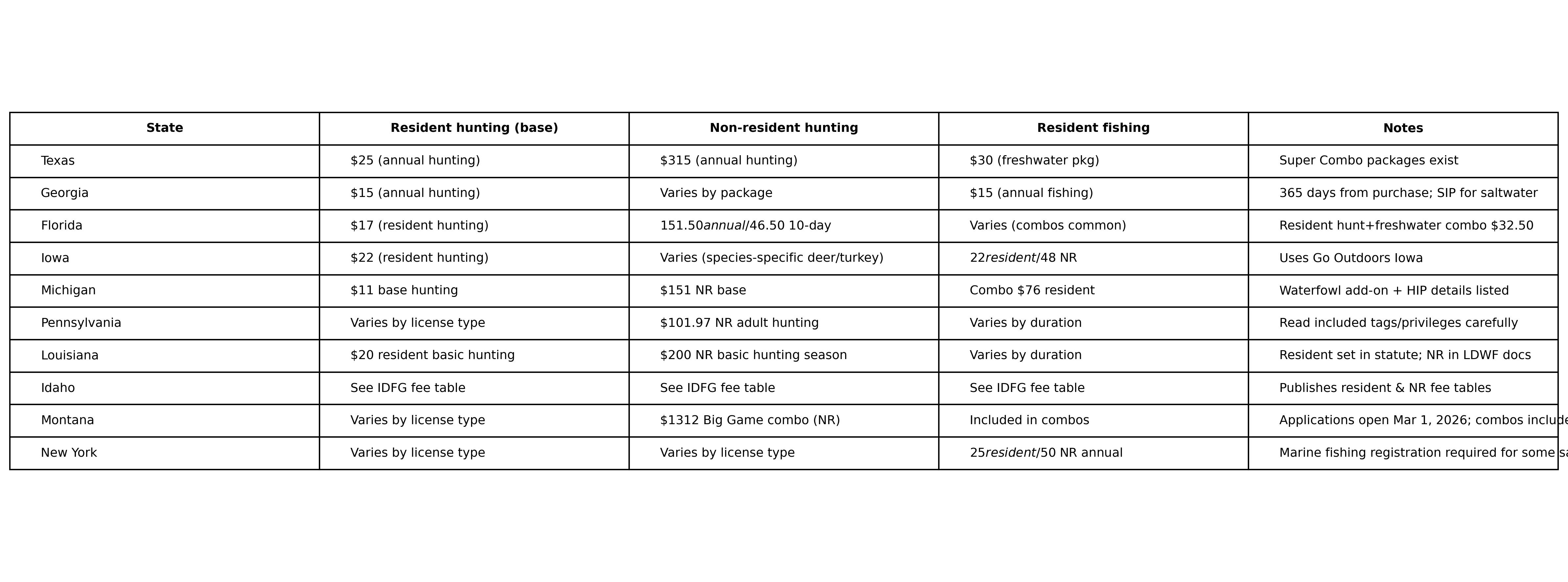
Use this chart to compare representative states. Always verify your exact license type and season before purchasing.
Don’t forget these common add-ons:
Getting licensed is easier than most people think. In many states, you can complete the entire process online in under 30 minutes.
Most first-time hunters must complete a hunter education course before purchasing a hunting license. Requirements vary by state and age. Courses are available online, in person, or hybrid. Fishing licenses generally do not require education. Some states offer apprentice licenses that allow supervised hunting before completing education.
You can usually buy your hunting or fishing license:
After purchasing your base license:
One of the most common questions is whether you need a hunting license on private land. In most cases, the answer is yes.
Being on private land does not automatically exempt you from state licensing requirements.
While licensing rules still apply, private land can simplify the process:
Lifetime hunting and fishing licenses can be a strong investment for dedicated outdoorsmen. Upfront costs range widely depending on state and age, but the long-term savings can be significant.
Break-even formula:
Lifetime license cost ÷ Annual license cost = Years to break even.
If you’re under 40 and plan to hunt or fish for decades, lifetime licenses are often worth it—especially if your state offers discounted youth rates. If you’re older, check whether your state offers senior lifetime or heavily reduced annual licenses before committing.
Licenses typically increase in price over time, so locking in today’s rate can add additional long-term value.
Most violations happen because of confusion, not bad intent.
Hunting and fishing licenses don’t have to be confusing. Once you understand the structure—base license, tags, stamps, permits—it becomes straightforward. Always check your specific state requirements, budget for non-resident premiums and add-ons, and consider a lifetime license if you’re committed long-term. Private land does not eliminate licensing requirements, but it can make the planning process simpler and more predictable. Now that you know what licenses you need, the next step is finding the right land. LandTrust connects you with over 1,000,000 acres of private hunting and fishing land across 40+ states. Each listing includes location, species, and local licensing details so you can go from licensed to booked without guesswork.