Sportsman
May 19, 2025

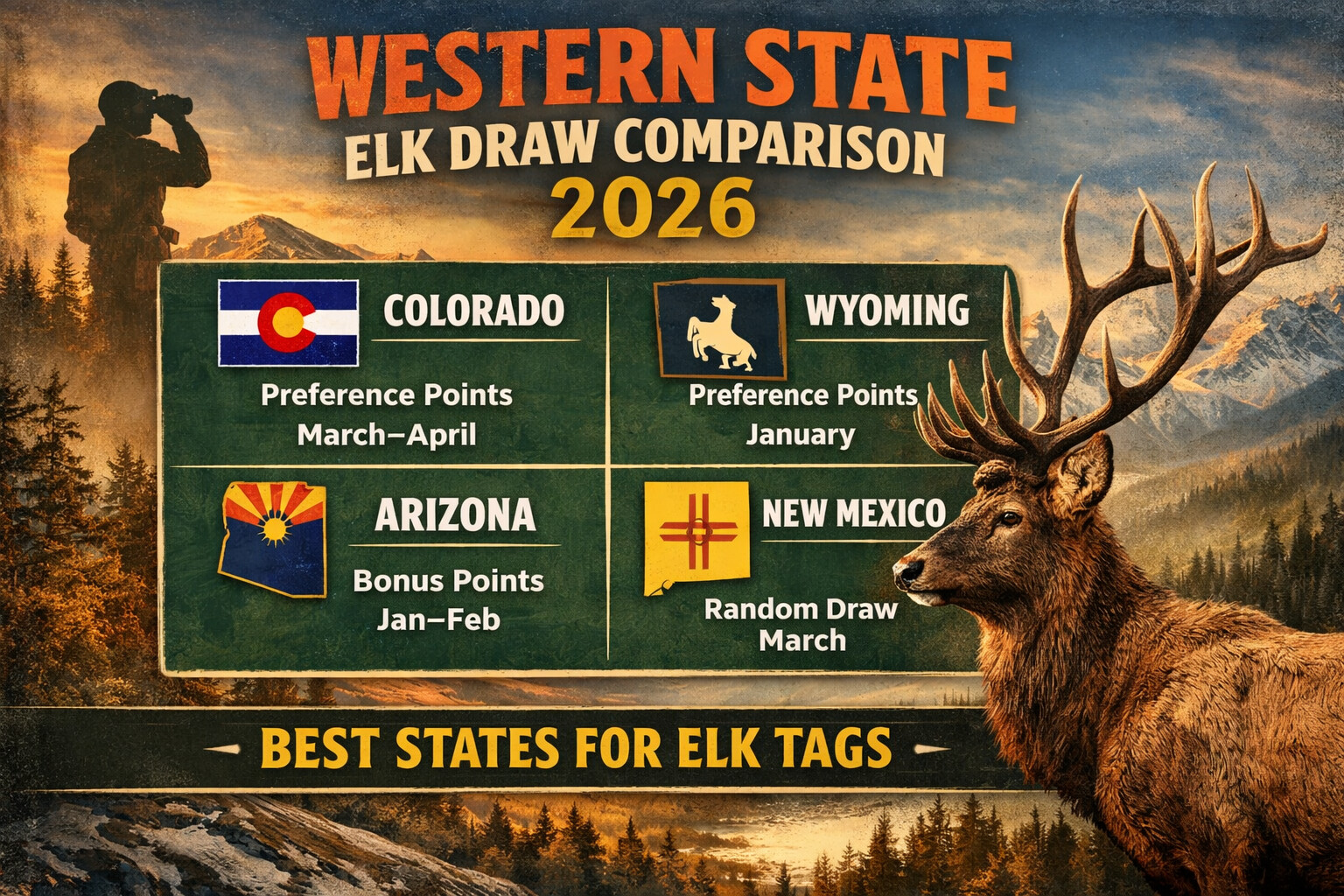
Every hunter knows the feeling.
You spend winter researching units, tracking deadlines, and sending application fees into the void. Then months later, the email arrives. You open it with hope… only to see one word next to your dream hunt: Unsuccessful.
Again.
Across the West, hunting permits are harder to draw than ever. Application numbers keep climbing while tag allocations stay flat—or shrink. States rely on increasingly complex draw systems, preference points, bonus points, and lotteries to manage demand. For hunters, that means more money invested, more rules to learn, and fewer guaranteed days in the field.
But here’s the truth most draw guides never mention: you don’t have to let the draw dictate whether you hunt this year.
This guide breaks down how hunting draws actually work, where to apply in 2026, and how to improve your odds without wasting years chasing the wrong strategy. More importantly, it introduces a smarter backup plan—private land access and LandTrust+ Draw Protection—that ensures you’re hunting every season, whether you draw or not.
We’ll cover the basics of hunting permits and tags, state-by-state draw strategies, realistic ways to boost your odds, and how savvy hunters protect their investment while building toward once-in-a-lifetime tags.
Before you can beat the draw system, you have to understand it.
At its core, a hunting draw is how states allocate limited hunting permits—often called tags—for species like elk, deer, and pronghorn. Because demand far exceeds supply, states use lottery-style systems to distribute opportunity while protecting wildlife populations.
This is where most confusion starts:
You can buy a license and still not receive a tag—that’s the draw.
Not all states play by the same rules:
Random Draw
Every applicant has equal odds each year. No points, no advantage. New Mexico uses this system for big game.
Preference Point System
Applicants with the most points draw first. Once the quota is filled, the draw ends. States like Wyoming and Colorado use preference points for certain species. In theory, enough patience guarantees a tag—but point creep often stretches timelines.
Bonus Point System
Points act like extra lottery tickets, improving your odds without guaranteeing success. Arizona and Montana rely heavily on this approach.
Hybrid Systems
Some states mix systems depending on species or unit, which adds another layer of complexity.
Draws aren’t designed to frustrate hunters—they’re a wildlife management tool. Limiting tags helps maintain healthy populations, spreads pressure across units, and preserves hunt quality. The downside is that individual hunters absorb all the uncertainty.
Pro tip: Preference points are a line you’re waiting in. Bonus points are lottery tickets you keep adding. Neither guarantees success—which is why experienced hunters always have a backup plan.
One of the biggest mistakes hunters make is applying to only one state and hoping for the best. Applying strategically across multiple states dramatically increases your chances of hunting each year.
Here’s a high-level look at major Western elk draw systems and who they’re best suited for:
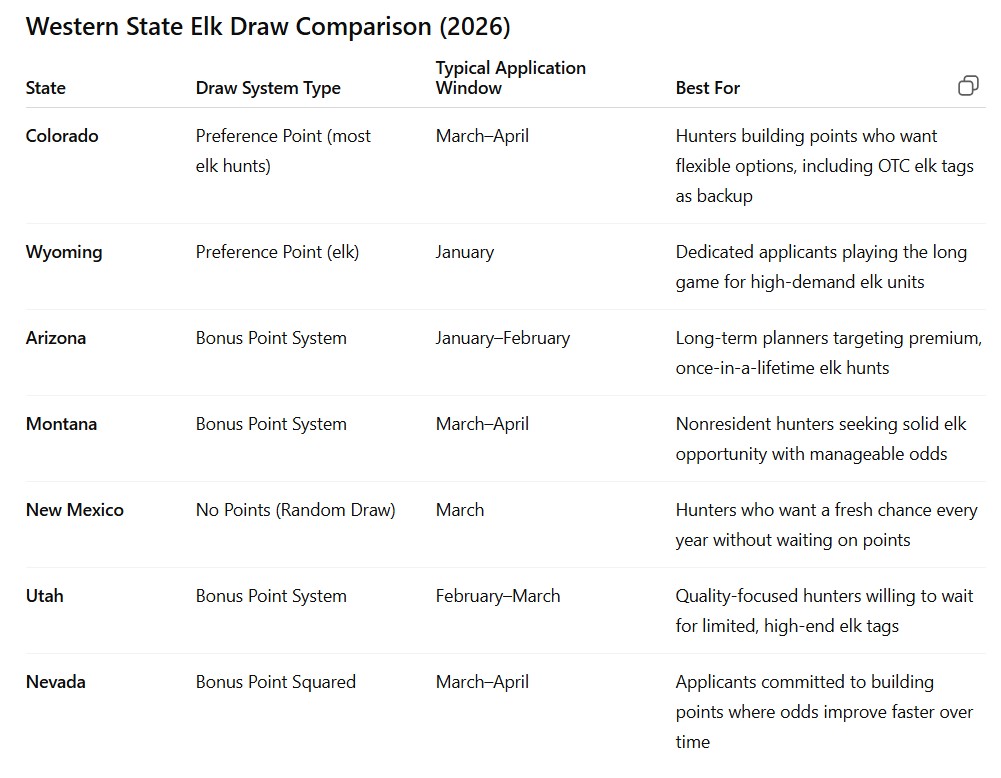
Keep an eye on Idaho’s evolving nonresident draw system in 2026, along with underrated options like Kansas and Nebraska. These states don’t offer classic Western elk experiences, but they can provide consistent hunting while you build points elsewhere.
Pro tip: Use New Mexico as your “annual swing” state—no points, no waiting—while stacking preference points in Wyoming or Colorado where patience eventually pays off.
Most hunters lose years to the draw game by making the same mistakes over and over.
State agencies publish draw statistics, and tools like GOHUNT’s draw odds calculator make trends easier to spot. Look at three to five years of data, not just last season.
Trophy units with 1–5% odds sound exciting—but general units with 30–50% odds put meat in the freezer. Second and third choices matter more than most hunters realize.
Burning points on a “good enough” hunt is how regret happens. Understand point creep and wait until the unit you actually want becomes realistic.
Group size can either help or destroy your odds depending on the state. In many cases, applying solo gives you more flexibility.
If you’ve gone five years without hunting while building points, something’s wrong. The hunters who succeed combine draw applications with guaranteed opportunities elsewhere.
Pro tip: Every year you apply and don’t hunt is an investment with zero return. Hunters who hunt annually combine draw strategy with private land access.
Here’s the part no traditional draw guide talks about: the money you lose when you don’t draw.
Between licenses, applications, and point purchases, most hunters spend $300–$800 per year applying across multiple states. Over five years, unsuccessful draws can cost thousands—without a single hunt to show for it.
LandTrust+ Draw Protection was built to change that equation.
Draw Protection helps LandTrust+ members offset nonrefundable application-related expenses when they don’t receive a tag. Instead of those costs disappearing into the draw system, they’re protected as part of your overall hunting strategy.
It’s exclusive to LandTrust+ and designed specifically for serious hunters who apply across multiple states.
Draw Protection is only one piece of LandTrust+. Members also get early booking access, exclusive properties, and the ability to hunt private land without outfitter markups—creating a system where you’re never stuck waiting on draw results alone.
Pro tip: Smart hunters don’t put all their eggs in the draw basket. Draw Protection ensures your application fees aren’t just sunk costs.
Even when you draw a tag, public land hunts can feel crowded. Drawing doesn’t guarantee solitude—or success.
Private land hunting offers something draws never will: certainty.
LandTrust connects hunters directly with landowners, offering verified properties across multiple states with transparent pricing and built-in insurance. Reviews from real hunters help you book with confidence.
Pro tip: The best strategy isn’t draws or private land—it’s both.
Hunters who consistently fill tags don’t rely on luck—they diversify.
Pillar 1: Strategic Draw Applications
Apply to three to five states, mixing dream hunts with realistic odds.
Pillar 2: Private Land Access
Book one or two private land hunts each year to stay sharp and hunt consistently.
Pillar 3: Draw Protection
Protect your investment so unsuccessful draws don’t derail your season.
Pro tip: Treat hunting like a portfolio. Draws are high-risk, high-reward. Private land is steady return. Draw Protection is insurance.
Hunting draws are complex—but they don’t have to control your year.
By applying strategically across states, understanding draw systems, and protecting your investment, you can stay in the field while building toward dream tags. Private land access ensures you’re hunting every season, not just waiting.
With LandTrust and LandTrust+ Draw Protection, your hunting strategy no longer depends on luck alone.
Explore Private Hunting Land on LandTrust
Find verified properties in your target states—no lottery required.
Already a LandTrust+ member? Make sure your Draw Protection benefits are active before this year’s application deadlines.