Landowner
Dec 12, 2024

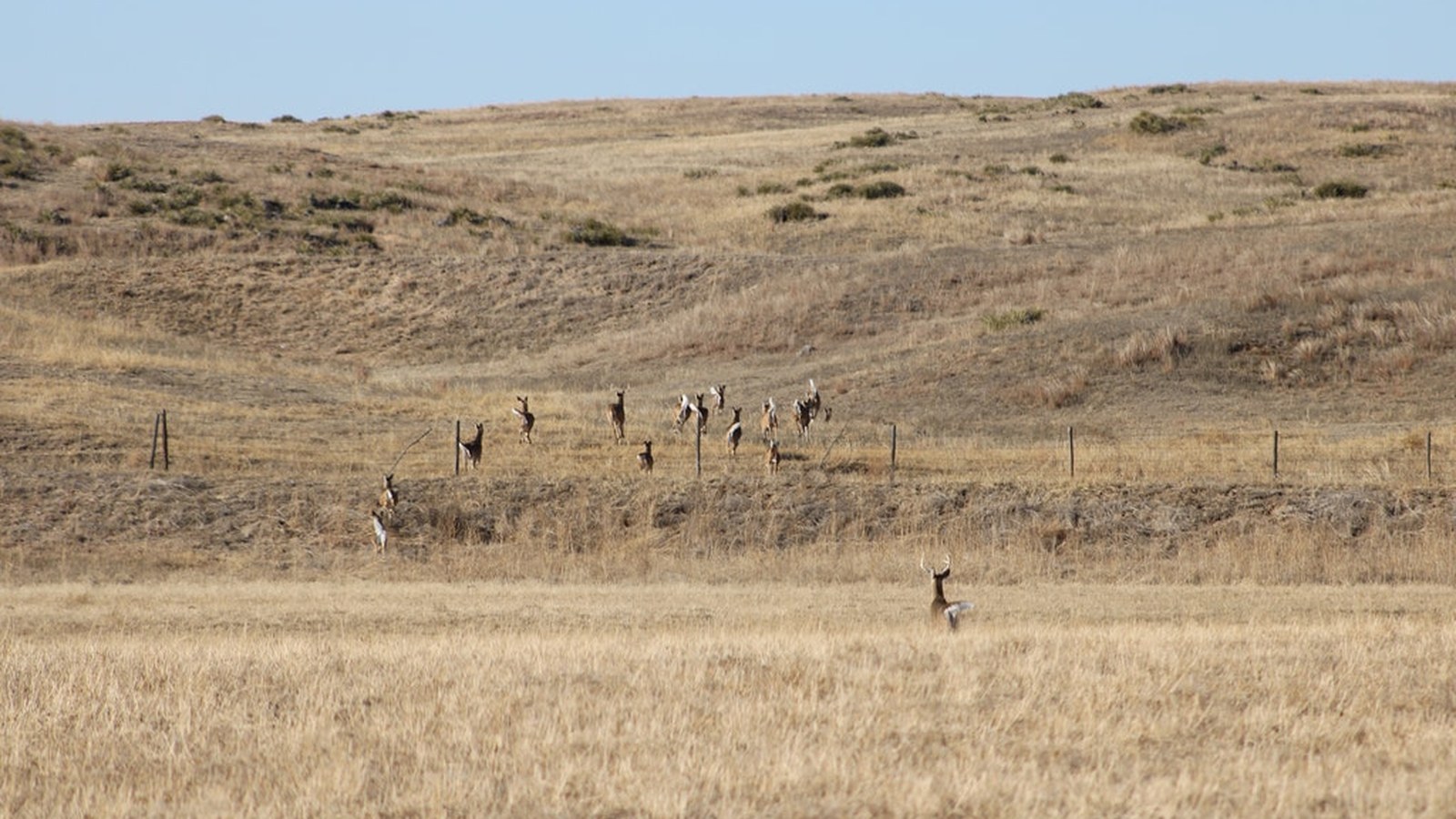
Deer hunting is the foundation of the American hunting tradition, but the hunters who consistently kill mature bucks year after year are not doing the same thing as the hunters who fill a tag occasionally and call it luck. The difference between a hunter who harvests a mature buck most seasons and one who waits years between opportunities almost always comes down to one thing — an understanding of deer behavior, habitat, and management that goes deeper than showing up on opening day and hoping for the best.
This guide covers deer hunting and management from the ground up — how deer use habitat across the season, how food, cover, and pressure interact to determine deer movement, and how private land access gives hunters the ability to apply management principles that public land hunting makes impossible.
Whitetail deer are not random in their movement. They respond to food availability, cover density, temperature, breeding cycles, and hunting pressure in ways that are predictable once you understand the underlying drivers. Hunters who treat deer movement as random are leaving their success to chance. Hunters who understand what deer are responding to at any given point in the season can position themselves ahead of that movement rather than reacting to it.
Early season deer behavior, from September through mid-October, is driven almost entirely by food. Bucks are in summer feeding patterns, focused on maximizing caloric intake before the energy demands of the rut begin. They are creatures of habit in early season in a way they are not at any other point in the year — using the same travel routes between bedding areas and food sources day after day until something disrupts the pattern. Early season hunting success on private land comes from identifying those routes without disturbing them, getting into position quietly, and hunting with wind and thermals working in your favor on stands that haven't been burned by previous sits.
The pre-rut period from mid-October through early November marks a transition in buck behavior that experienced hunters recognize immediately. Bucks begin to expand their home range, make scrapes and rubs along travel corridors, and increase daylight movement as testosterone levels rise and does begin to approach estrus. This is the period when mature bucks that have been almost entirely nocturnal through September and early October start to make mistakes — moving during daylight, checking scrapes on predictable schedules, and responding to calling and rattling in ways they won't at other times of the year.
Peak rut in most of the whitetail's range occurs in the first two weeks of November, though timing shifts by latitude — northern states like Minnesota, Wisconsin, and Michigan see peak breeding earlier than southern states like Georgia, Mississippi, and Florida where rut timing can extend into December and January. During the peak rut, bucks are focused on locating and breeding does to the exclusion of almost everything else, including self-preservation. They cover ground, cross open areas in daylight, and respond to calling with an urgency that makes the peak rut the most exciting and most productive hunting period of the year for mature buck harvest.
Post-rut behavior from late November through December is misunderstood by hunters who pack up after the peak rut winds down. Bucks that have survived the rut are exhausted and focused entirely on food, and they can be hunted effectively on late-season food sources with the same consistency as early season hunting. The difference is that the food sources that matter in late season are different — standing grain, food plots with brassicas that sweeten after frost, and concentrated mast in areas that other food has been depleted. Cold weather that limits food availability is the late-season hunter's best friend, pushing deer onto the remaining productive food sources in predictable numbers.
The ability to manage habitat for deer is the primary practical advantage of private land hunting over public land hunting, and it is what separates a managed deer property from unmanaged ground in terms of deer density, buck age structure, and hunting quality over time.
Food plots are the most visible and most discussed element of private land deer management, but their role is more nuanced than simply planting something green and waiting for deer to show up. Effective food plot strategy on a private property considers the relationship between food plots and bedding cover, the wind patterns that determine which plots deer will use comfortably, the seasonal succession of food sources that keeps deer on the property from September through January, and the hunting pressure that food plots attract and how to manage that pressure without educating deer.
Summer food plots planted in clover, chicory, and soybeans provide high-protein nutrition during antler growing season and hold deer on the property through the summer. Fall food plots in brassicas, turnips, and winter wheat provide late-season nutrition that keeps deer on the property when surrounding ground has been harvested and natural food sources are depleted. A property with both summer and late-season food plots in the right locations relative to bedding cover and prevailing winds is a different hunting environment than a property with a single plot in the most convenient field.
Native habitat management goes beyond food plots. Timber stand improvement — selectively cutting mature timber to create openings that produce browse and early successional cover — provides bedding habitat that deer use year-round and that holds deer on a property more effectively than food plots alone. Hinge cuts that lay trees over to create horizontal cover, native grass plantings along field edges that provide thermal cover in cold weather, and water sources managed for reliability through dry periods all contribute to a property's ability to hold deer at the density and age structure that serious hunters are chasing.
Hunting pressure is the most underappreciated variable in deer management, and it is the one that most hunters on public land have no control over. Deer in heavily pressured areas do not disappear — they shift to nocturnal movement, change their travel routes to avoid areas of human intrusion, and use the most impenetrable cover available during daylight hours. The mature bucks that survive multiple hunting seasons on public land do so by becoming almost completely nocturnal during the hunting season.
Private land management of hunting pressure is what allows deer to be hunted during daylight hours season after season rather than driving them to nocturnal patterns. Entry and exit routes to stands that avoid bedding areas, stands that are hunted only on favorable wind conditions rather than on a fixed schedule, and limiting the number of intrusions into the core of a property during the season all contribute to maintaining deer movement patterns that make hunting productive.
Stand rotation on private land — hunting different stand locations based on wind direction, season phase, and deer sign rather than returning to the same stand regardless of conditions — is one of the most impactful practices a private land hunter can adopt. A stand location that is burned by hunting it on the wrong wind direction or too many consecutive days takes weeks to recover, and in a short deer season, wasted stand time has a direct cost in missed opportunities.
Trail cameras are the private land hunter's most valuable scouting tool, providing information about which deer are using specific locations, when they're using them, and how their patterns shift through the season. A trail camera network that covers food sources, scrapes, rub lines, and travel corridors without requiring physical intrusion into hunting areas gives private land hunters a level of situational awareness that public land hunters simply cannot achieve. Checking cameras remotely through cellular-enabled models eliminates even the intrusion of card pulls from sensitive areas during the hunting season.
Voluntary antler restrictions on private land — passing young bucks to allow them to reach maturity — are the single most impactful management decision a private land hunter or hunting club can make for long-term buck quality. A buck that is harvested at one and a half years old is a buck that will never reach its antler potential. The same genetics allowed to reach four and a half or five and a half years of age produces a fundamentally different deer.
The challenge of voluntary antler restrictions on private land is that their effectiveness depends on neighboring properties adopting similar practices. A buck that spends time on a managed property but crosses onto neighboring ground with no age restrictions will be harvested young regardless of what the managing hunter does. Working with neighbors to establish shared management goals, even informally, multiplies the effectiveness of individual property management decisions.
Doe harvest management is the other side of the deer management equation that gets less attention than buck quality but matters equally for long-term herd health. Overpopulated doe herds suppress habitat through overbrowsing, produce more deer than the land can support in good body condition, and create social structures that compress rut timing and reduce the visible buck activity that hunters associate with the peak rut. Properties that manage doe harvest to match carrying capacity produce deer in better body condition, with healthier antler development and more visible rut activity than overpopulated properties.
The management practices described in this guide require one thing above all else — access to the same piece of ground across multiple seasons. You cannot implement food plot strategy, trail camera networks, stand rotation, and voluntary antler restrictions on a piece of public land that you share with other hunters who have different goals and no stake in the long-term outcome.
Private land access through LandTrust gives hunters the ability to apply these principles on verified private ground, whether that's a single season booking to experience what managed private land deer hunting produces or a recurring arrangement with a landowner whose property is managed at a level that reflects serious investment in habitat and herd quality.
When you browse deer hunting properties on LandTrust, property descriptions give you the information you need to evaluate what level of management a property reflects — food plots, trail camera coverage, stand locations, and landowner knowledge of the deer using the property are all details that translate directly into hunting quality.
Browse deer hunting properties on LandTrust and find private land managed for mature buck harvest across the country's best whitetail states.